

Sunday mornings had a smell before they had a shape.
Coconut oil, warming in a small vessel on the stove. Not hot, never boiling — just the temperature of something that has been tended to. My mother would call me before the rest of the day had started, and I would sit cross-legged on the floor while she stood behind me, working the oil through my hair in sections, her fingers pressing into my scalp with the unhurried certainty of someone who had learned this from her own mother, who had learned it from hers.
It was not explained. It did not need to be. Like so much of what our mothers do, it simply was.
I went to school the next day with that oil still in my hair. Slicked back and clipped, every curl pressed into place, the baby hairs pinned flat. Every girl around me looked much the same. It was the done thing, the expected thing, the thing nobody questioned — because it worked, because it had always been done, because our mothers knew something about our hair that we had not yet thought to ask about.
For generations, coconut oil has been part of Indian hair care, often used before washing and worked into the scalp and lengths. I didn't understand why it worked then. I only knew that my hair felt different when my mother did it.
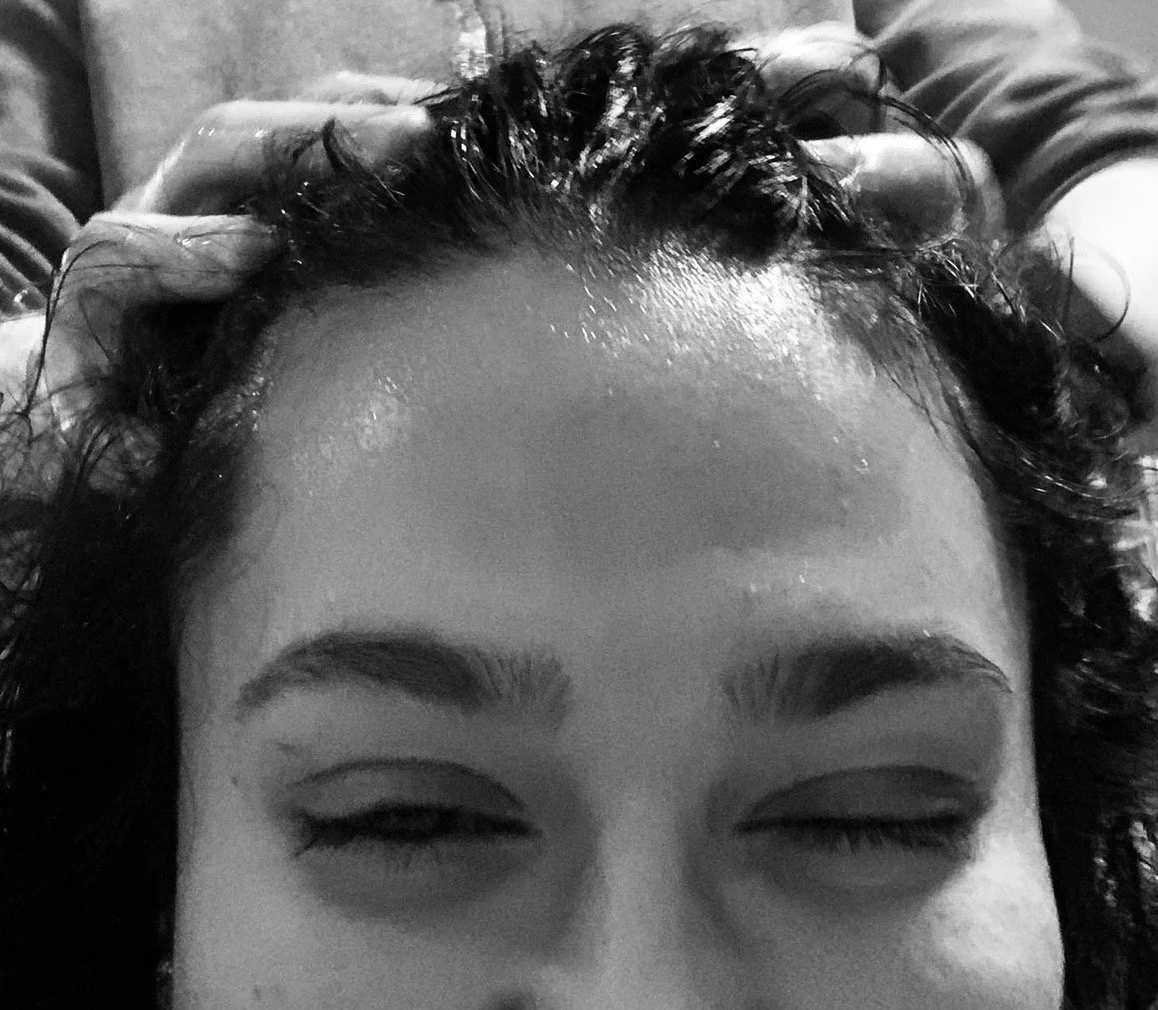
The Coconut Oil Ritual
What they knew, and what I only understand now, is that coconut oil applied before washing is one of the most effective things you can do for textured, curly hair. A study published in the Journal of Cosmetic Science found that coconut oil penetrates the hair shaft in a way that mineral and sunflower oils do not, significantly reducing protein loss during washing. The Sunday morning ritual was not superstition or habit for habit's sake. It was science, practised quietly in kitchens across India for generations, long before anyone thought to write it down in a journal.
But I was a teenager, and teenagers do not want to inherit. They want to invent.
So I stopped. I left the oil behind and let my curls out — imperfect and unpinned and mine. My hair was considered unruly by those around me, something to be managed. For a while I didn't care. The mess of it felt like the first honest thing about me.
What I did not notice, until much later, was what I had reached for in its place.
Straighteners. Keratin treatments. Bottles and sachets of chemicals designed in laboratories for hair that looked nothing like mine, developed by an industry that had never thought to include me in its definition of the word beautiful. I was not liberating myself. I was simply exchanging one set of instructions for another — only the second set had better packaging, and carried the authority of modernity, and was sold to me as the obvious choice.
From Chāmpo to Shampoo
The word shampoo itself holds this history inside it, if you look. It comes from the Hindi chāmpo, to press, to knead — from the Sanskrit chapayati. It reached England in the early nineteenth century, carried back by traders who had experienced Indian head massage, and was promptly commercialised, simplified, stripped of its context and bottled. A holistic ritual of oil, massage, cleansing and care — one that understood the scalp as something to be nourished, not just cleaned — became a product. And the market that grew from that product was not designed with the hair of the people who gave it its name.
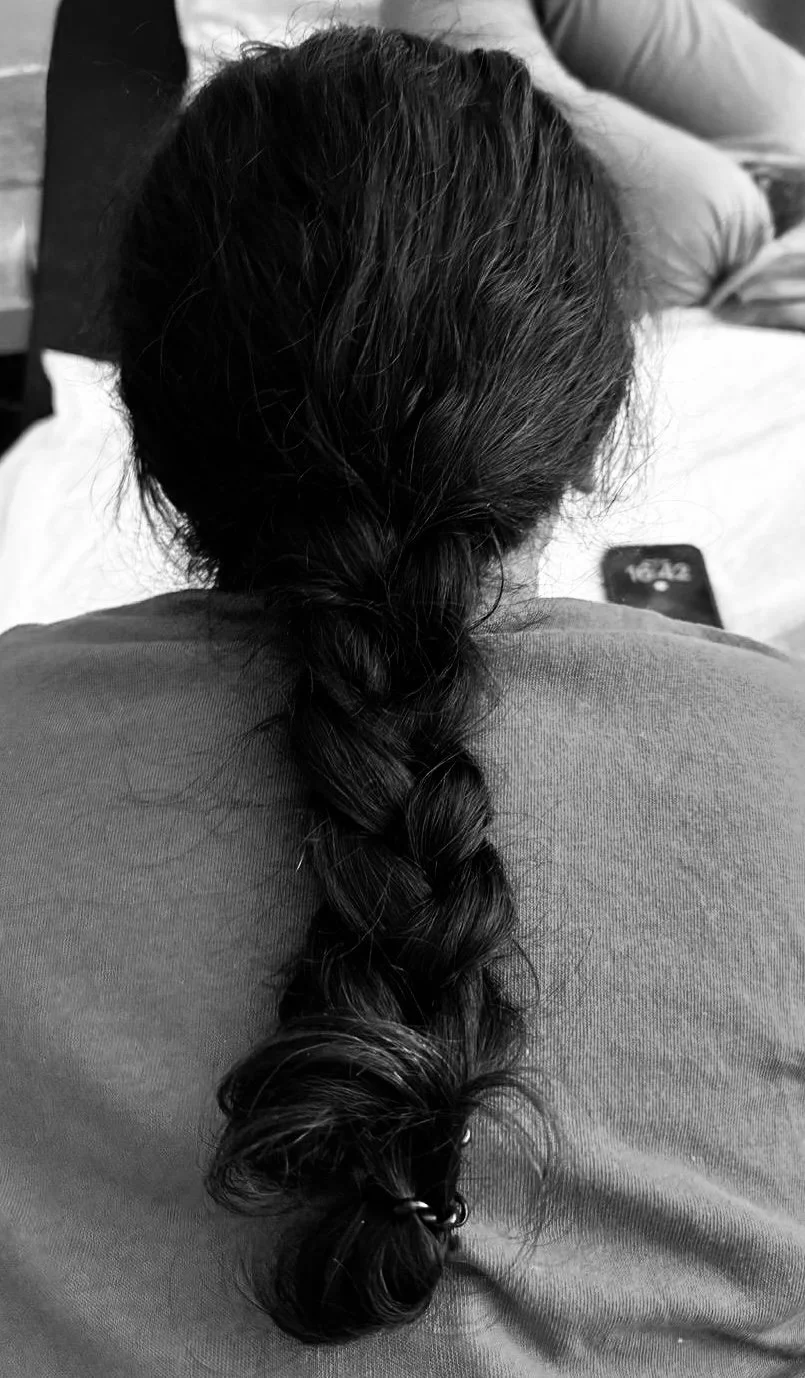
What Hair Oiling Taught Me
I did not know any of this when I was a teenager. I only knew what I saw around me, and what I saw told me that straight was better, smooth was better, manageable was better. I believed it for longer than I would like to admit.
It was my scalp that eventually told me otherwise. When I stopped oiling, it began to dry out. To flake. The quiet, unremarkable steadiness that had always been there — maintained every Sunday morning by a ritual I had taken entirely for granted — was suddenly and noticeably absent. No product I tried replicated it. No serum or mask or leave-in conditioner filled that particular gap.
But hair oiling and scalp oiling aren’t quite the same thing, and the evidence around the latter is more complicated that I once understood.
I came back to oiling gradually, practically, without ceremony. Not as an act of reclamation or a return to roots, but because it worked and nothing else did. I oil my hair before I wash it whenever I can. My scalp stays balanced. The scaling stops. My curls hold their shape in a way that reminds me, faintly, of Sunday mornings on the floor of my mother's kitchen.
The practice did not need to be dramatic. It needed to be understood — on my own terms, in my own time, with the knowledge that what had been passed down to me was not merely tradition but something more durable than that.

This is the kind of knowledge we want to make space for: a place where this kind of knowledge is taken seriously. Where the inherited wisdom of women who knew their hair — who understood it before the industry arrived with its own version of the story — is given the space and the science it always deserved.