
Reviewed by Daniella Eboson, Chemist
If you grew up in a Black household, someone has likely parted your hair into sections and worked grease (or oil) into your scalp. It's one of the most enduring practices in our hair care, passed down without much need for explanation. Dry scalp, oil it. Simple.
Over the past few years, dermatologists started saying the opposite. Stop oiling because you might be making it worse.
If you've seen that advice and felt some combination of confusion and defensiveness, you're in good company. So let's go through what the research says, because the argument is more specific than "oil is bad," “grease is bad,” and the answer depends a lot on what your scalp is currently doing.
Two different practices, one word
Most of the confusion comes from the fact that "oiling hair" describes two things that have very little to do with each other.
The first is putting oil on the hair itself, especially the mid-lengths and ends. This one has good reasoning behind it. Afro-textured hair grows from a curved follicle and emerges as a flattened, elliptical strand rather than a round one, which is what makes it coil.
Sebum, the oil your scalp produces naturally, slides easily down a straight strand but struggles to travel the length of a coiled one. The ends of your hair are the oldest and most fragile part, and they receive the least natural lubrication. Adding oil there is filling a real gap.
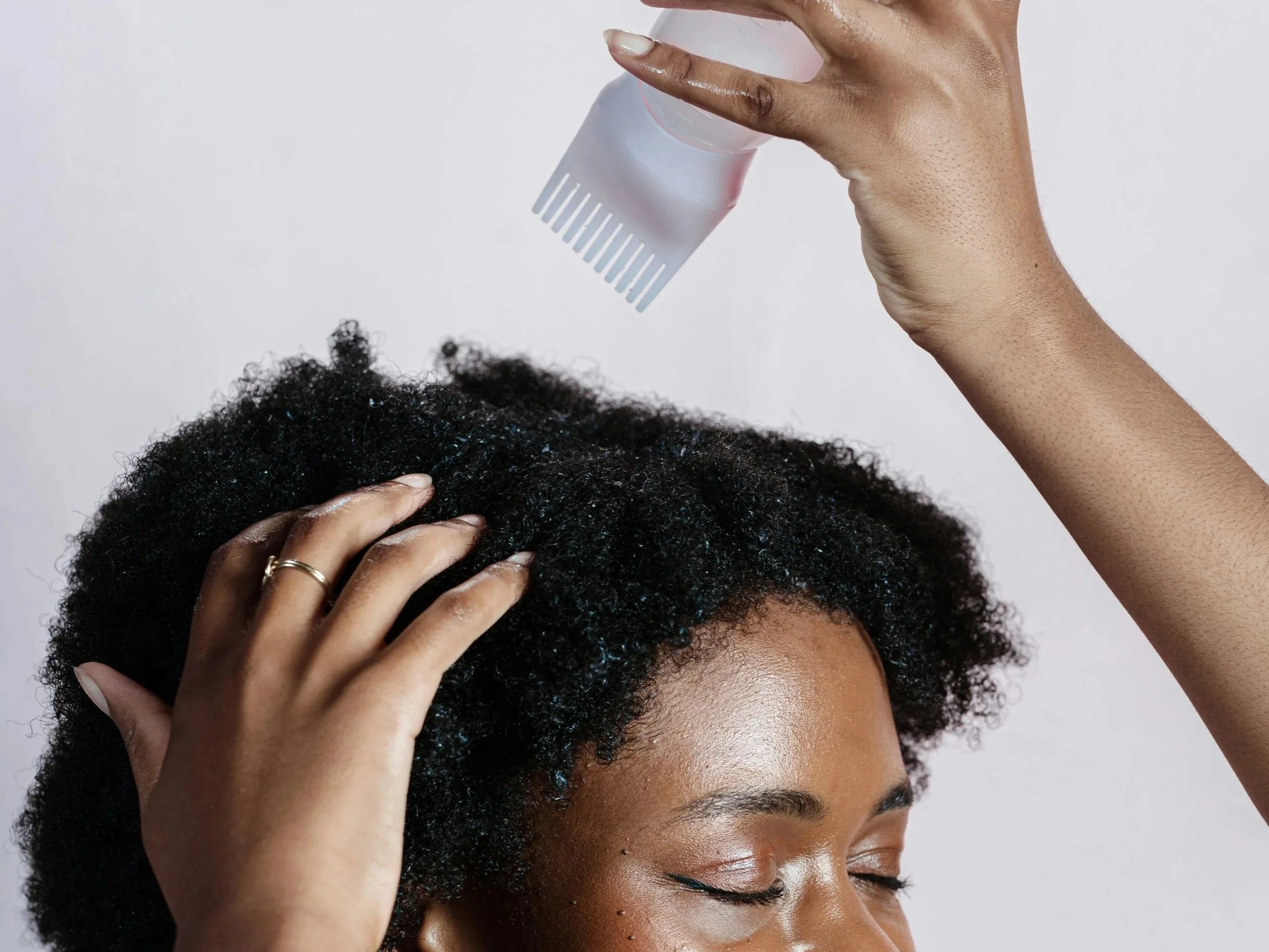
The second practice is applying oil directly to the skin of your scalp. This is the one dermatologists are questioning, and it's worth understanding why.
The argument against scalp oiling
In 2023, three dermatologists published a letter in Skin Appendage Disorders titled "Hair Oils May Worsen Seborrheic Dermatitis in Black Patients." Their reasoning is like this.
Seborrheic dermatitis, and its milder relative dandruff, involves a yeast called Malassezia that lives on everyone's scalp. It's normally harmless. The problem starts when it overgrows and your immune system reacts to it, which produces the itching, flaking and irritation people recognise.
Malassezia is lipid-dependent. It can't make its own fatty acids, so it takes them from whatever is around it. Here's the detail that makes this click. When laboratories want to grow Malassezia on purpose, they feed it oil.
That's the basis for the concern: putting those same oils on your scalp could, in theory, create an environment that favours Malassezia activity.
One honest caveat. The authors are clear that no clinical studies have tested this in people. It's lab work and reasonable inference, which is a fair basis for caution but not the same as proof.
What about different oils?
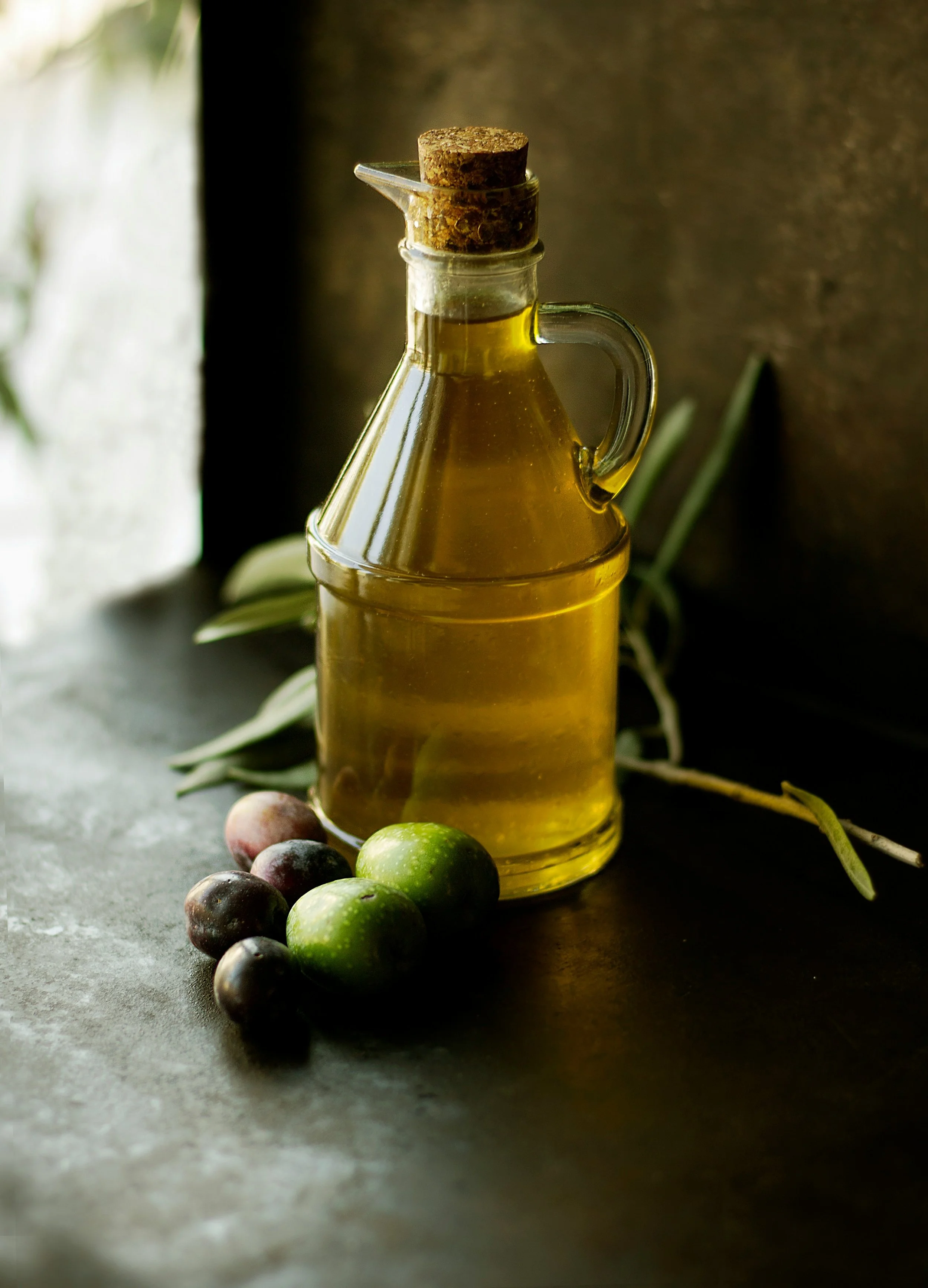
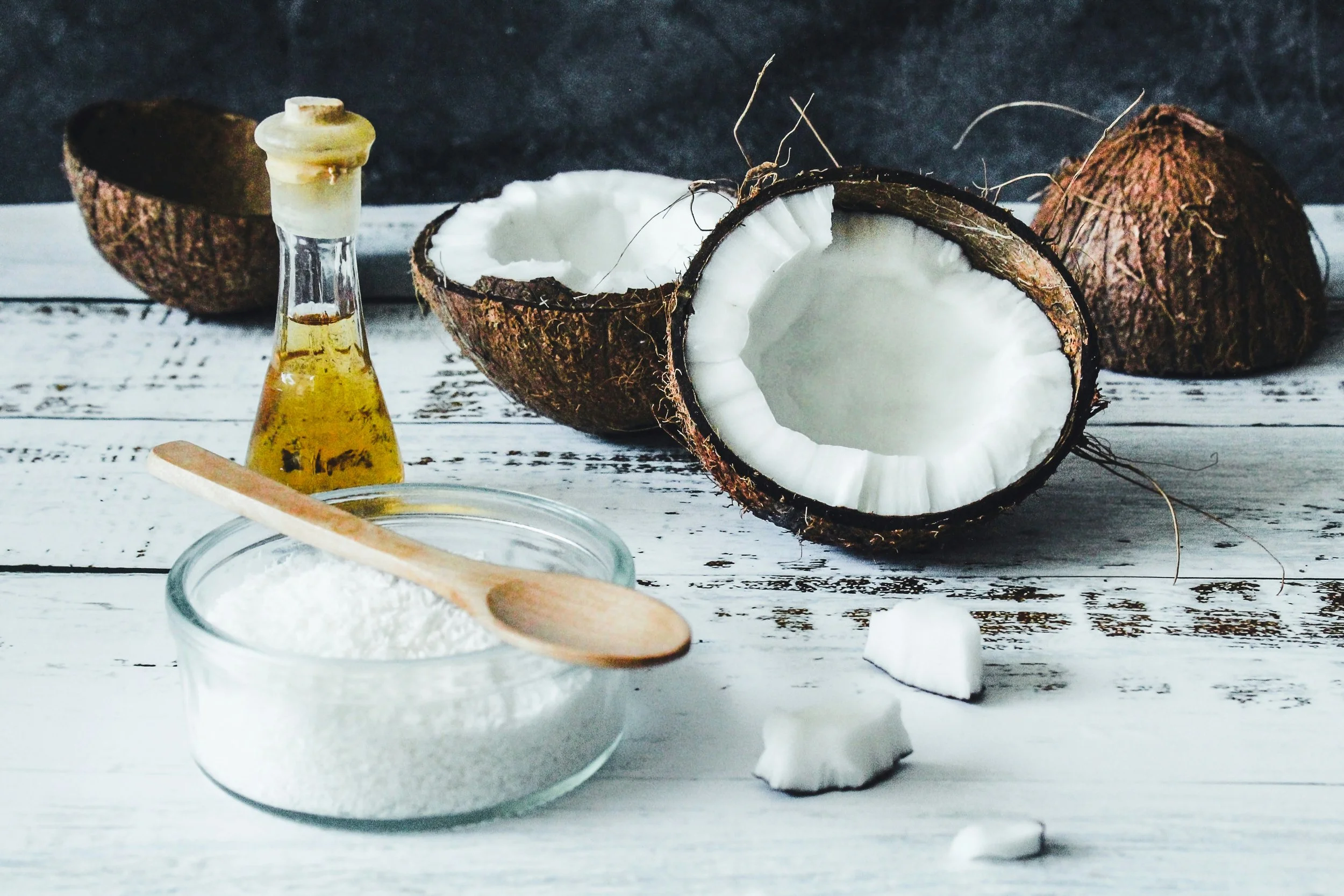
It’s tempting to make a list of “good” and “bad” oils for the scalp.
Plant oils differ in their fatty-acid composition, stability and other properties. And a finished scalp product is more than a single oil: concentration, frequency of use, contact time and the other ingredients in the formulation all matter.
Mineral oil and petrolatum, fractionated MCT oil, and squalane are generally considered less likely to provide the fatty acids that support Malassezia growth. There’s an interesting irony here: the old-school blue and green hair greases that were dismissed as unsophisticated for years were often petrolatum-based. Unlike many plant oils, petrolatum does not contain triglycerides that Malassezia can readily break down to release long-chain fatty acids.
It might be less about the oil than the time
There's a second factor that rarely gets discussed, and it's the one most relevant to how we actually wear our hair.
Oil applied to a scalp that then goes three or four weeks without being cleansed is a very different situation from oil applied two days before wash day.
That matters because of another finding. A study co-authored by dermatologist Nonhlanhla Khumalo, with Renée Beach as lead author, found that baseline inflammatory markers on the scalps of women with afro-textured hair were higher than expected, and that they dropped after shampooing, then climbed back up by the time of a follow-up visit a week later.
Cleansing isn't only cosmetic; it appears to be doing something for the scalp environment itself. So the risk might not be the oil. It might be the oil sitting undisturbed for an extended period of time.
So what should you actually do?
If your scalp is calm — no persistent itching, no flaking, no tenderness — there's no strong reason to abandon a routine that's working for you. Keep an eye on it and note what changes if you do.
If you're flaking, itching, or seeing greasy scale, this is where caution is genuinely warranted. Try taking oils off your scalp for a few weeks, keeping them on your lengths and ends instead. If things improve, you have your answer. If they don't, the problem is probably something else, and it's worth getting looked at.
If you wear long-term protective styles, pay attention to the time factor. Applying oil to your scalp and then leaving it for an extended period of time is the scenario with the most reason for concern. Scalp-focused cleansing between installs matters more than the oil question itself.
Summary
Oiling your hair is well supported. Oiling your scalp is contested. If your scalp is happy, carry on. If it isn't, the oils are a reasonable first thing to change.
What we'd push back on is the version of this advice that tells everyone to stop oiling entirely. The research doesn't say that, and treating this practice as automatically wrong isn't the same as being evidence-based.
Disclaimer
This article is general information, not medical advice. Persistent flaking, itching, tenderness or hair loss deserves a proper evaluation from a dermatologist.